Study poultry parts, egg quality, and ready-to-cook broiler stations with real USDA photographs, a labeled cut chart, and a clear note where no matching image is available.
This is a student study guide aligned to published Florida FFA event topics. It is not an FFA-issued resource or endorsement. Use the current rules as the authority for event scope.
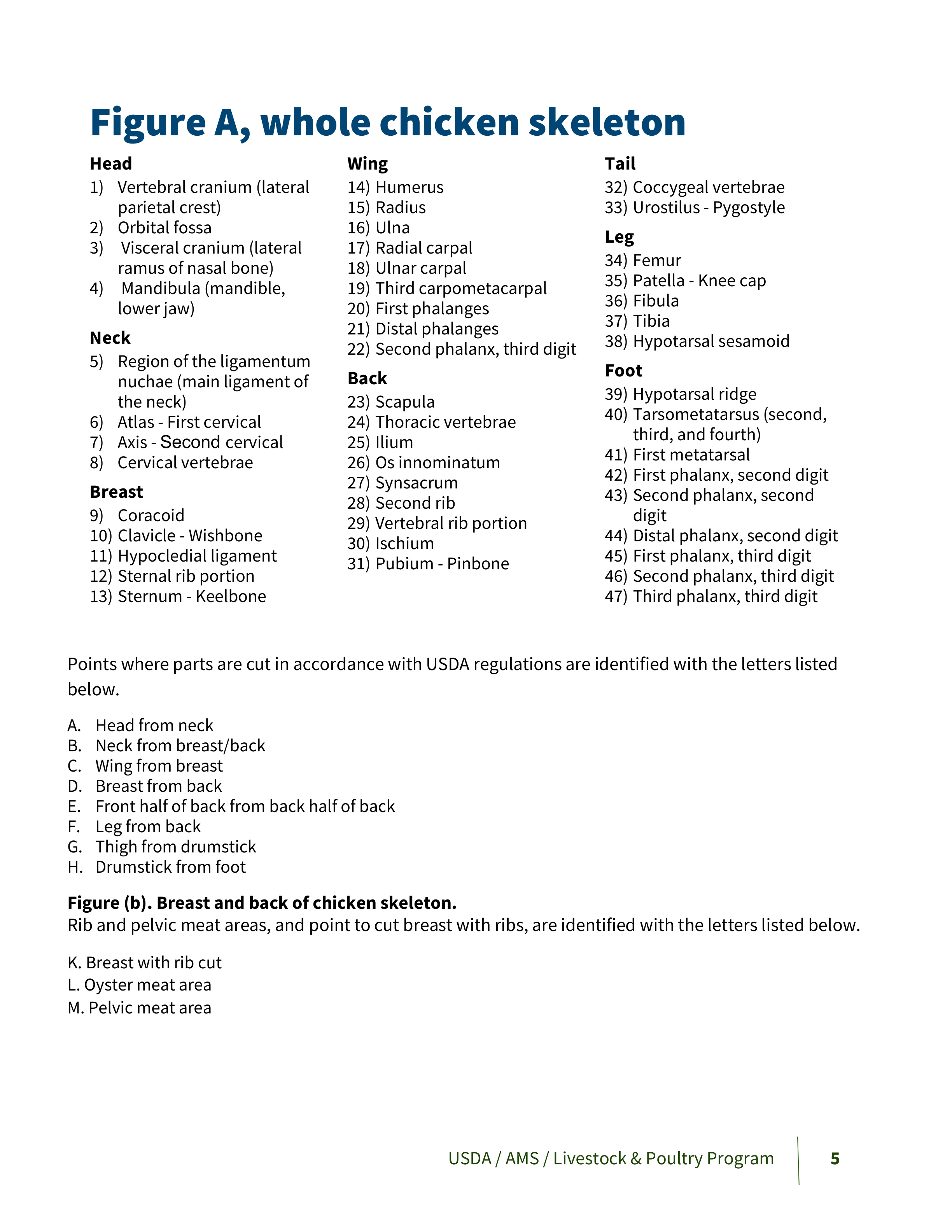
Half · USDA internal cut-location chart This labeled skeleton chart supports cut-location study. It is not an external body-parts photo or a meat product photograph. Open source page 7 ↗ · Open full-size chart to zoom ↗
Use the source image carefully.Matched poultry cuts show authentic local USDA photos or the standard USDA chart. Terms with no exact on-page photo are marked clearly. Use current Florida FFA rules for contest scope.
External anatomy · live bird
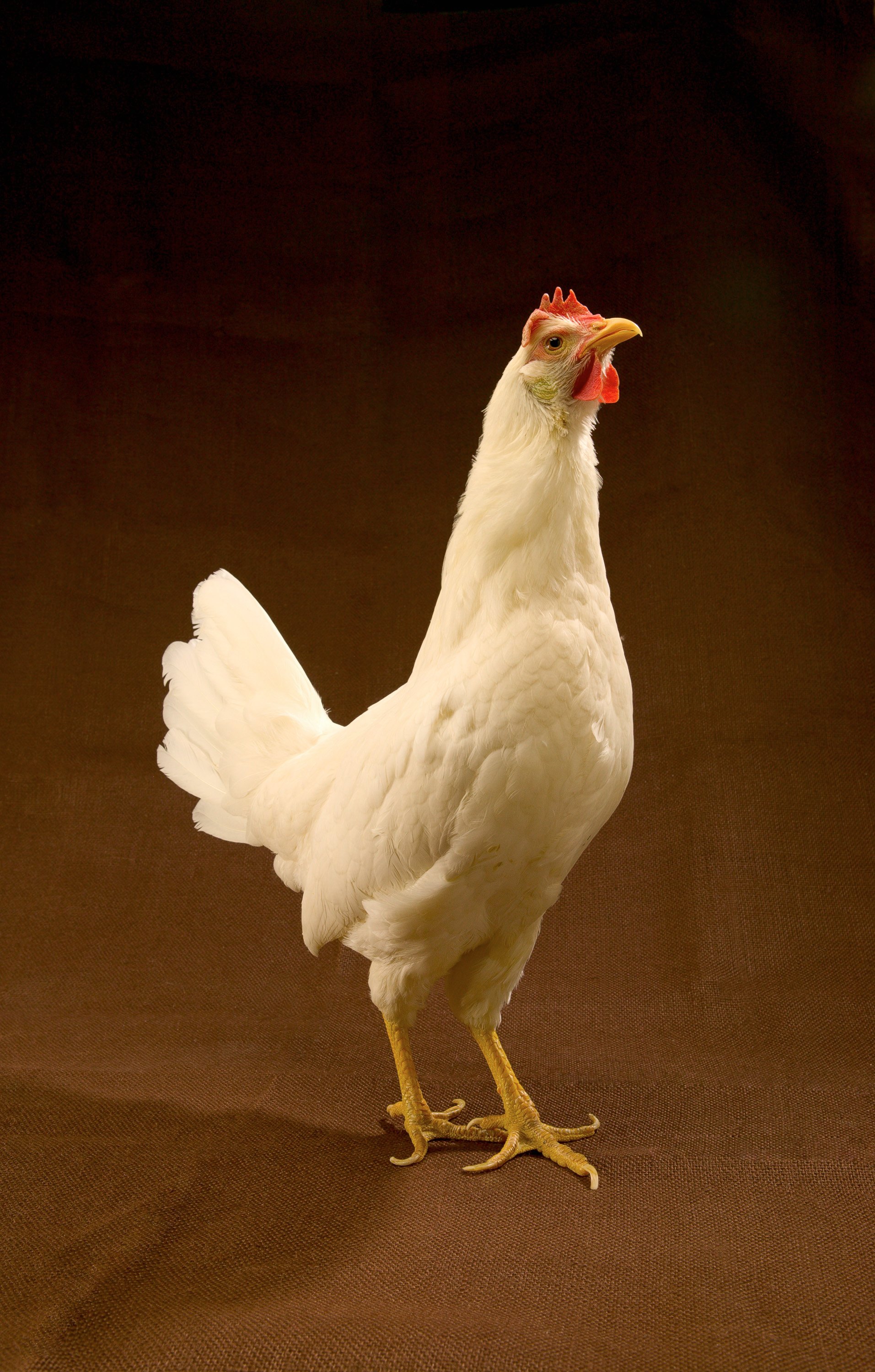
Study visible parts on a real hen
This is a real USDA breed photograph, not an official placing-class specimen. Use the large HTML labels with the photo; no guessed arrows are drawn over the image.
White Leghorn hen · visible landmarksStephen Ausmus · USDA Agricultural Research Service · public domain · original 1913×3000 photo.USDA ARS photo record ↗
Comb Fleshy crest on top of the head.
Eye On the side of the head, below and behind the comb.
Beak Hard bill at the front of the head.
Wattle Fleshy lobes hanging below the beak.
Earlobe Small patch of skin below and behind the eye.
Neck Joins the head to the body.
Back Top side of the body, between neck and tail.
Wing Paired limb along each side of the body.
Breast Front underside of the body.
Tail Feathers extending from the rear of the body.
Shank Lower leg between the hock and toes.
Toes and claws Digits and their pointed coverings at the end of each foot.
Photo limits: this pose does not show the vent, pubic bones, or abdominal capacity. Those evaluation points cannot be studied from this image.
Egg quality · source figures
Compare shell and interior references
These reproductions come from the USDA Egg-Grading Manual. Each image is linked at its original size for zoom; read the caption because a single photo or candling view is not a complete grade.
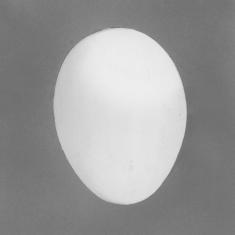
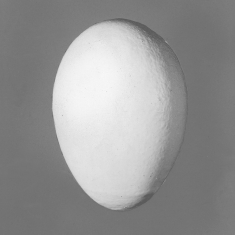
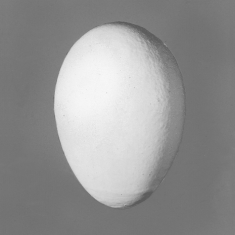
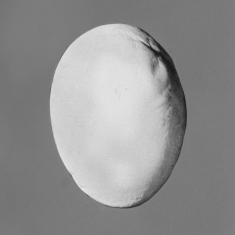
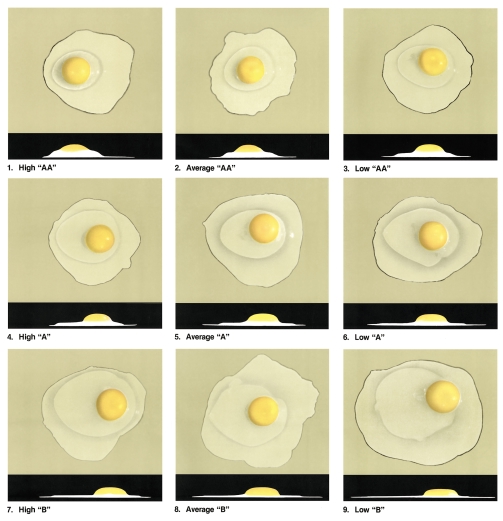
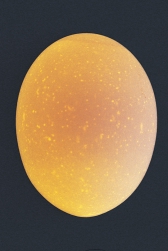
Ideal shell shapeFigure 32 · commonly seen in AA or A eggs.USDA AMS · Egg-Grading Manual · reproduced unaltered.Manual and grading guidance ↗Practically normal shapeFigure 33 · may occur in AA or A eggs.USDA AMS · Egg-Grading Manual · reproduced unaltered.Manual and grading guidance ↗Slight ridges or rough areasFigure 34 · slight shell texture that does not materially affect strength or shape.USDA AMS · Egg-Grading Manual · reproduced unaltered.Manual and grading guidance ↗Abnormal shell shapeFigure 35 · pronounced ridges or thin spots.USDA AMS · Egg-Grading Manual · reproduced unaltered.Manual and grading guidance ↗Broken-out interior comparisonFigure 38 · nine examples compare albumen and yolk condition. This is broken-out quality, not candling.USDA AMS · Egg-Grading Manual · reproduced unaltered.Manual and grading guidance ↗Slightly defined yolk outlineFigure 40 · one candling observation, not a complete grade.USDA AMS · Egg-Grading Manual · reproduced unaltered.Manual and grading guidance ↗Fairly well-defined yolk outlineFigure 41 · one candling observation, not a complete grade.USDA AMS · Egg-Grading Manual · reproduced unaltered.Manual and grading guidance ↗Plainly visible yolk outlineFigure 42 · one candling observation, not a complete grade.USDA AMS · Egg-Grading Manual · reproduced unaltered.Manual and grading guidance ↗
Several historical manual figures are low-resolution scans. Captions provide the study labels in readable text; fine image detail is limited by the source reproduction.
Trusted references
Use official rules for the current season.
These are FFA-aligned practice materials, not copied handbooks. Source photographs and reference pages remain credited to their publishers and creators.