01
42 reference cardsFruit, Leaves & Rootstocks
Fruit, leaves and rootstocks with visual separation cues.
Citrus rewards careful observation: fruit shape, leaf and petiole traits, pest stages, symptom patterns, weeds and production knowledge all need different recognition habits.
Switch between the color chart and the sketch companion. These are broad fruit overviews; the reference library also covers the exact cultivars, rootstocks, leaves, pests, disorders, and weeds.
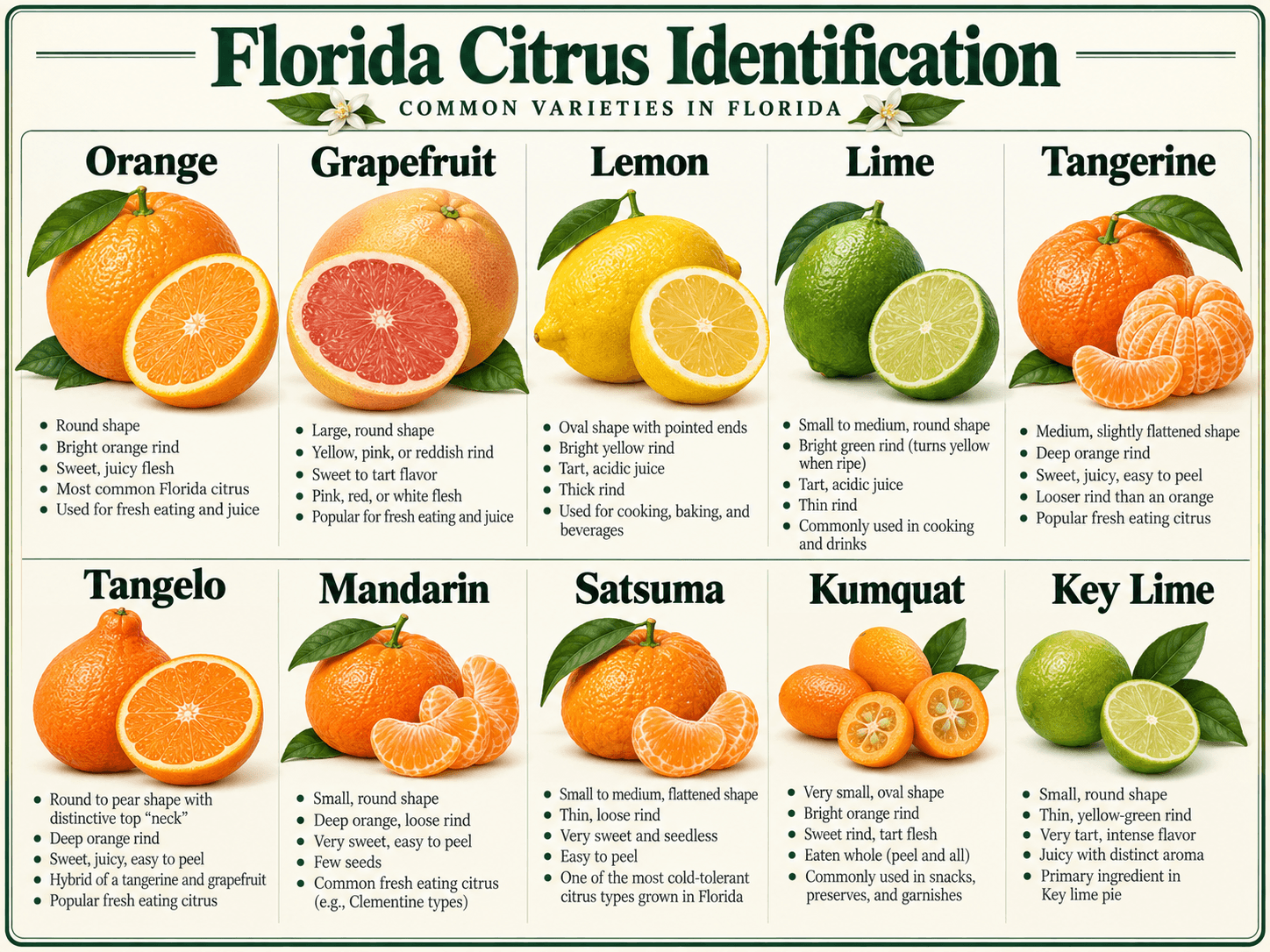
Use shape, rind, internal features, and the complete specimen together; rind color alone is not enough.
Tangerines and satsumas are mandarin types, not ten mutually exclusive botanical groups. The strong neck on this tangelo illustration represents a Minneola-type form, not every tangelo.
The chart's seed, size, and flavor descriptions are generalizations. Do not use a generic red grapefruit drawing to identify Duncan or Marsh, or a fruit picture to identify a rootstock leaf.
Check the botanical referenceEach section has its own reference pool and practice route so students can build reliable clues before mixing categories together.
Fruit, leaves and rootstocks with visual separation cues.
Pests, beneficials, parasites and pathogens from the official study pool.
Diseases, disorders, deficiencies and injury patterns.
Official weed identification with whole-plant and leaf-shape recognition.
Real references beside field-guide illustrations and approved supplemental sketches.
Production and management concepts for written practice.
Describe visible structure before naming anything.
Compare against the closest confusing item.
Hide the answer and prove the clue is memorable.
Move into timed or mixed practice only after recognition is stable.