Plant ID ●
Silver Vase Bromeliad Aechmea fasciata
Look first Start with the vase-shaped rosette of broad, banded silver-green leaves and the stiff pink central bracts.
Closest check Unlike most foliage rosettes, the leaves form a central water-holding cup and the inflorescence rises from its center.
Contest habit say the first visible clue before you say the plant name.
Memory cue Silver vase = silver-banded leaf cup + pink center.
Speed Slow Normal Fast Voice Device Natural AI Plant ID ●
Flamingo Plant Anthurium × andraeanum
Look first Find the glossy heart-shaped spathe surrounding a straight, finger-like spadix.
Closest check Peace Lily also has a spathe and spadix, but usually has white spathes and long lance-shaped leaves.
Contest habit say the first visible clue before you say the plant name.
Memory cue Anthurium = shiny heart + finger spadix.
Speed Slow Normal Fast Voice Device Natural AI Open sketch study Illustrated study aid. Illustrated flower form. Confirm the official common and botanical names with the source-backed reference card; cultivars vary.
Plant ID ●
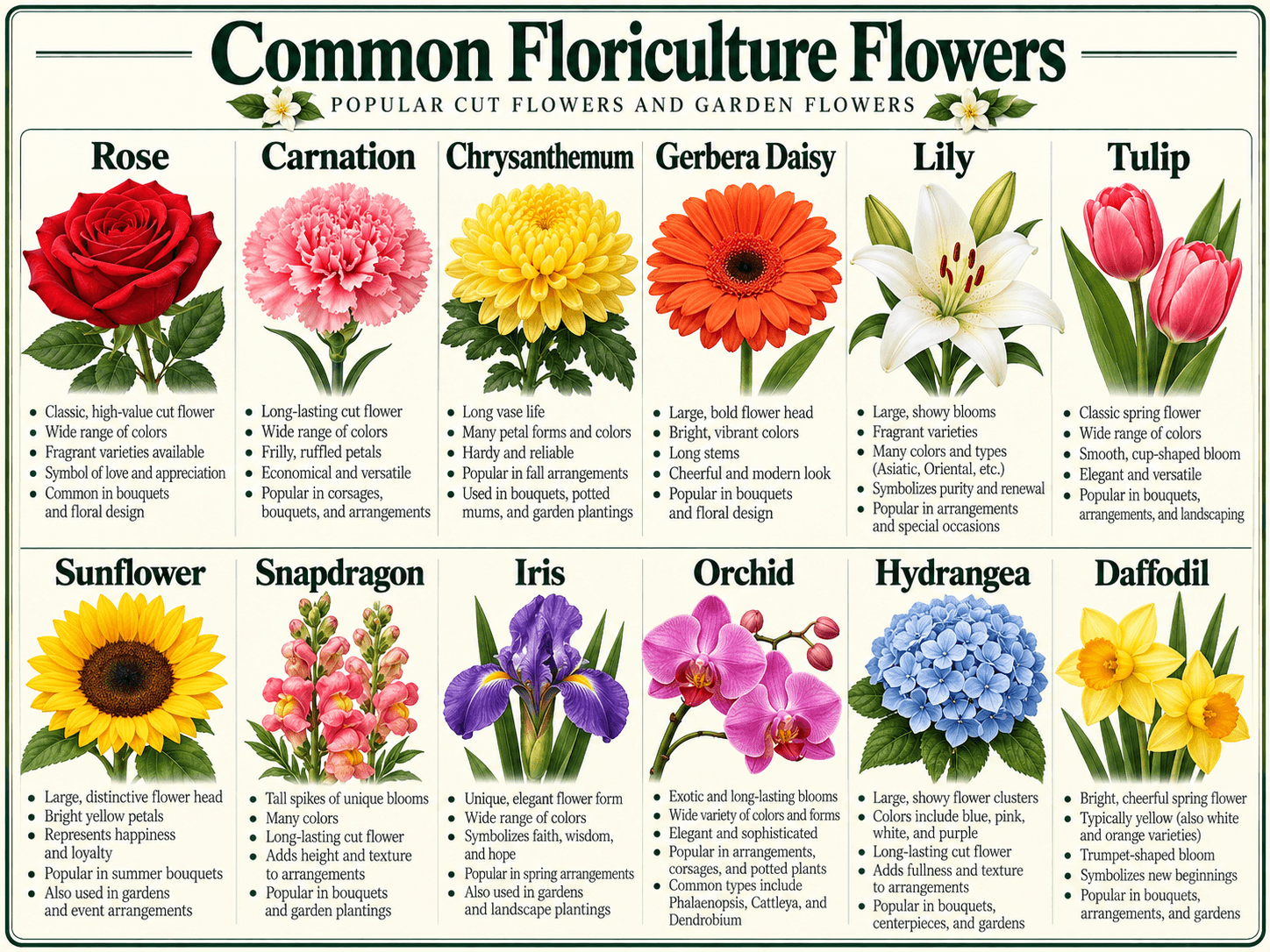
Snapdragon Antirrhinum majus
Look first Look for an upright flower spike lined with larger two-lipped 'dragon-mouth' blooms.
Closest check Angelonia has smaller, more open flowers and a lighter, narrower spike.
Contest habit say the first visible clue before you say the plant name.
Memory cue Snapdragon = mouths marching up a spike.
Speed Slow Normal Fast Voice Device Natural AI Plant ID ●
Zebra Plant Aphelandra squarrosa
Look first Start with dark glossy leaves crossed by bold pale or white veins.
Closest check Prayer Plant also has patterned foliage, but its pattern is broader/blotched and leaves are usually oval rather than sharply white-veined.
Contest habit say the first visible clue before you say the plant name.
Memory cue Zebra Plant = dark leaf + bright vein stripes.
Speed Slow Normal Fast Voice Device Natural AI Plant ID ●
Norfolk Island Pine Araucaria heterophylla
Look first Look for a symmetrical conifer with regular horizontal tiers of soft-looking branches.
Closest check Its whorled, layered branch architecture is more orderly than most foliage houseplants.
Contest habit say the first visible clue before you say the plant name.
Memory cue Norfolk = stacked Christmas-tree tiers.
Speed Slow Normal Fast Voice Device Natural AI Plant ID ●
Caladium Caladium × hortulanum
Look first Start with thin, broad heart-to-arrow-shaped leaves painted with contrasting veins, blotches or margins.
Closest check Nephthytis has arrowhead leaves too, but typically lacks Caladium's thin, dramatically patterned leaf blade.
Contest habit say the first visible clue before you say the plant name.
Memory cue Caladium = painted paper-thin heart/arrow leaf.
Speed Slow Normal Fast Voice Device Natural AI Plant ID ●
Periwinkle Catharanthus roseus
Look first Look for flat five-petaled pinwheel flowers above glossy opposite leaves with a pale midrib.
Closest check Pentas flowers form starry clusters; vinca/periwinkle shows larger individual pinwheel flowers.
Contest habit say the first visible clue before you say the plant name.
Memory cue Periwinkle = five-petal pinwheel + glossy opposite leaves.
Speed Slow Normal Fast Voice Device Natural AI Plant ID ●
Cockscomb Celosia argentea
Look first Look for a velvety crested flower head shaped like a brain or rooster comb; plume forms may look flame-like.
Closest check Globe Amaranth has separate round papery heads, not a fused crest.
Contest habit say the first visible clue before you say the plant name.
Memory cue Cockscomb = comb, brain or flame.
Speed Slow Normal Fast Voice Device Natural AI Open sketch study Illustrated study aid. Illustrated flower form. Confirm the official common and botanical names with the source-backed reference card; cultivars vary.
Plant ID ●
Florist's Chrysanthemum Chrysanthemum × morifolium
Look first Use the distinctly lobed aromatic-looking foliage along with the dense composite flower heads.
Closest check China Aster and Zinnia can have similar flower colors; mum leaves are deeply lobed and diagnostic.
Contest habit say the first visible clue before you say the plant name.
Memory cue Mum = packed flower head + lobed leaf.
Speed Slow Normal Fast Voice Device Natural AI Plant ID ●
Croton Codiaeum variegatum
Look first Start with thick glossy leaves splashed or veined in yellow, red, orange and green.
Closest check Coleus is colorful too, but its leaves are softer, thinner and usually toothed rather than leathery.
Contest habit say the first visible clue before you say the plant name.
Memory cue Croton = glossy leather leaf painted in many colors.
Speed Slow Normal Fast Voice Device Natural AI Open sketch study Illustrated study aid. Illustrated flower form. Confirm the official common and botanical names with the source-backed reference card; cultivars vary.
Plant ID ●
Carnation Dianthus caryophyllus
Look first Look for ruffled many-petaled flowers, narrow blue-green leaves and obvious swollen stem nodes.
Closest check Stock also comes in spikes of flowers, but has broader leaves and lacks Carnation's jointed narrow-leaf stems.
Contest habit say the first visible clue before you say the plant name.
Memory cue Carnation = ruffles + skinny leaves + knobby joints.
Speed Slow Normal Fast Voice Device Natural AI Plant ID ●
Golden Pothos Epipremnum aureum
Look first Look for a trailing/climbing vine with heart-shaped leaves commonly splashed yellow and a distinctly grooved/winged petiole.
Closest check Heartleaf Philodendron usually has a smoother rounded petiole and thinner, more symmetrical heart-shaped leaf.
Contest habit say the first visible clue before you say the plant name.
Memory cue Pothos = gold-splashed heart + grooved petiole.
Speed Slow Normal Fast Voice Device Natural AI Plant ID ●
Poinsettia Euphorbia pulcherrima
Look first Look for brightly colored leaf-like bracts surrounding tiny true flowers in the center.
Closest check Do not call the colored bracts petals; the small yellow-green center structures are the actual flowers.
Contest habit say the first visible clue before you say the plant name.
Memory cue Poinsettia = bright bracts, tiny center flowers.
Speed Slow Normal Fast Voice Device Natural AI Open sketch study Illustrated study aid. Illustrated flower form. Confirm the official common and botanical names with the source-backed reference card; cultivars vary.
Plant ID ●
Gerbera Daisy Gerbera jamesonii
Look first Look for a very large daisy-like flower head held on a mostly leafless stalk above a basal leaf rosette.
Closest check China Aster and Zinnia usually carry leaves along flowering stems.
Contest habit say the first visible clue before you say the plant name.
Memory cue Gerbera = giant daisy on a bare stalk.
Speed Slow Normal Fast Voice Device Natural AI Plant ID ●
Baby's Breath Gypsophila elegans
Look first Look for an airy cloud of tiny flowers on very fine, repeatedly branching stems.
Closest check Waxflower has woody stems and narrow needle-like leaves; Baby's Breath looks softer and cloudier.
Contest habit say the first visible clue before you say the plant name.
Memory cue Baby's Breath = tiny white flower cloud.
Speed Slow Normal Fast Voice Device Natural AI Plant ID ●
English Ivy Hedera helix
Look first Look for a trailing/climbing vine with firm, palmately veined leaves commonly showing 3–5 pointed lobes.
Closest check Nephthytis has arrow-shaped juvenile leaves rather than the classic ivy-lobed outline.
Contest habit say the first visible clue before you say the plant name.
Memory cue English Ivy = climbing vine + pointed lobes.
Speed Slow Normal Fast Voice Device Natural AI Open sketch study Illustrated study aid. Illustrated flower form. Confirm the official common and botanical names with the source-backed reference card; cultivars vary.
Plant ID ●
Sunflower Helianthus annuus
Look first Start with the large composite head: a broad central disk surrounded by ray petals, plus coarse broad leaves.
Closest check Shasta Daisy also has rays and disk, but is much smaller with white rays and narrower foliage.
Contest habit say the first visible clue before you say the plant name.
Memory cue Sunflower = giant disk + rays.
Speed Slow Normal Fast Voice Device Natural AI Open sketch study Illustrated study aid. Illustrated flower form. Confirm the official common and botanical names with the source-backed reference card; cultivars vary.
Plant ID ●
Big Leaf Hydrangea Hydrangea macrophylla
Look first Look for broad opposite serrated leaves and huge rounded or lacecap clusters of many small flowers.
Closest check The very large flower cluster plus big toothed leaves separates it from Pentas or Ageratum.
Contest habit say the first visible clue before you say the plant name.
Memory cue Hydrangea = big leaf + big flower ball.
Speed Slow Normal Fast Voice Device Natural AI Plant ID ●
Ageratum Ageratum houstonianum
Look first Look for soft, fuzzy button-like flower clusters above opposite, toothed leaves.
Closest check The flower heads look fluffy rather than daisy-like, and the plant is much finer-textured than hydrangea or pentas.
Contest habit say the first visible clue before you say the plant name.
Memory cue Ageratum = fuzzy little buttons.
Speed Slow Normal Fast Voice Device Natural AI Plant ID ●
Peruvian Lily Alstroemeria hybrid
Look first Look for lily-like flowers with streaks or spots on the inner tepals and narrow leaves along leafy stems.
Closest check Unlike true lilies, Alstroemeria flowers are usually smaller in clustered stems and often have striped inner petals.
Contest habit say the first visible clue before you say the plant name.
Memory cue Peruvian Lily = small lily bloom + striped inner petals.
Speed Slow Normal Fast Voice Device Natural AI Plant ID ●
Anemone Anemone coronaria
Look first Look for a poppy-like flower with a conspicuous dark center above finely divided foliage.
Closest check Ranunculus has many tightly layered petals; anemone usually shows an open face with the dark center exposed.
Contest habit say the first visible clue before you say the plant name.
Memory cue Anemone = open face + dark eye.
Speed Slow Normal Fast Voice Device Natural AI Plant ID ●
Dill Anethum graveolens
Look first Start with the extremely fine, threadlike blue-green foliage and flat umbrella-shaped flower clusters.
Closest check Parsley is also in the carrot family but has much broader divided leaf segments.
Contest habit say the first visible clue before you say the plant name.
Memory cue Dill = feathery threads + umbrella flowers.
Speed Slow Normal Fast Voice Device Natural AI Plant ID ●
Angelonia Angelonia hybrid
Look first Look for upright spikes of small snapdragon-like flowers with narrow lance-shaped leaves.
Closest check Snapdragon flowers are larger and more distinctly two-lipped on a heavier spike.
Contest habit say the first visible clue before you say the plant name.
Memory cue Angelonia = mini snapdragons on a slim spike.
Speed Slow Normal Fast Voice Device Natural AI Plant ID ●
Sprengeri Fern Asparagus densiflorus
Look first Look for arching or trailing stems covered in many tiny needle-like cladodes; it is not a true fern.
Closest check Boston and Leatherleaf ferns have obvious flat fronds divided into pinnae.
Contest habit say the first visible clue before you say the plant name.
Memory cue Sprengeri = cascading green needles, not flat fern fronds.
Speed Slow Normal Fast Voice Device Natural AI Plant ID ●
Monte Cassino Aster Aster pringlei
Look first Look for airy branching sprays of many small daisy flowers with yellow centers.
Closest check Solidago forms masses of tiny yellow flowers without the obvious daisy ray-and-disk look.
Contest habit say the first visible clue before you say the plant name.
Memory cue Monte Cassino = a cloud of tiny daisies.
Speed Slow Normal Fast Voice Device Natural AI Plant ID ●
Astilbe Astilbe hybrid
Look first Start with soft, feathery upright flower plumes above compound, toothed foliage.
Closest check Liatris makes a tighter vertical spike; Astilbe makes branched, fluffy plumes.
Contest habit say the first visible clue before you say the plant name.
Memory cue Astilbe = ferny leaves + feather plumes.
Speed Slow Normal Fast Voice Device Natural AI Plant ID ●
Wax Begonia Begonia × semperflorens-cultorum
Look first Look for compact plants with glossy, succulent-looking rounded leaves and small waxy flowers.
Closest check Tuberous Begonia usually has much larger, showier flowers and larger asymmetrical foliage.
Contest habit say the first visible clue before you say the plant name.
Memory cue Wax Begonia = small glossy leaves + small waxy blooms.
Speed Slow Normal Fast Voice Device Natural AI Plant ID ●
Tuberous Begonia Begonia × tuberhybrida
Look first Look for large, showy often double flowers above fleshy, asymmetrical leaves.
Closest check Wax Begonia is smaller and simpler in both leaf and flower scale.
Contest habit say the first visible clue before you say the plant name.
Memory cue Tuberous Begonia = big bloom + lopsided fleshy leaf.
Speed Slow Normal Fast Voice Device Natural AI Plant ID ●
Million Bells Calibrachoa hybrid
Look first Look for a trailing plant covered with many small petunia-like trumpet flowers and small leaves.
Closest check Petunia has noticeably larger flowers and larger, often sticky-hairy foliage.
Contest habit say the first visible clue before you say the plant name.
Memory cue Million Bells = mini petunias by the dozens.
Speed Slow Normal Fast Voice Device Natural AI Plant ID ●
China Aster Callistephus chinensis
Look first Look for daisy-type composite flower heads on upright stems with toothed leaves.
Closest check Gerbera usually has a single large flower on a mostly leafless stalk from a basal rosette.
Contest habit say the first visible clue before you say the plant name.
Memory cue China Aster = leafy stem + aster/daisy head.
Speed Slow Normal Fast Voice Device Natural AI Plant ID ●
Campanula Campanula hybrid
Look first Look for unmistakable bell- or cup-shaped flowers, often held in clusters on leafy stems.
Closest check Hyacinth makes a dense bulb spike; Campanula flowers show individual open bells.
Contest habit say the first visible clue before you say the plant name.
Memory cue Campanula = campana means bell.
Speed Slow Normal Fast Voice Device Natural AI Plant ID ●
Garden Canna Canna × generalis
Look first Start with very large paddle-shaped, banana-like leaves and tall flower stalks.
Closest check Bird of Paradise also has large leaves, but its distinctive flower emerges from a boat-shaped spathe.
Contest habit say the first visible clue before you say the plant name.
Memory cue Canna = tropical paddle leaves + tall flower spike.
Speed Slow Normal Fast Voice Device Natural AI Plant ID ●
Ornamental Pepper Plant Capsicum annuum
Look first Look for a compact leafy plant carrying many small colorful pepper fruits, often upright.
Closest check Do not identify by fruit color alone; the conical pepper fruit and simple pointed leaves are the key combination.
Contest habit say the first visible clue before you say the plant name.
Memory cue Ornamental pepper = tiny bright peppers on a compact plant.
Speed Slow Normal Fast Voice Device Natural AI Plant ID ●
Parlor Palm Chamaedorea elegans
Look first Look for delicate pinnate fronds on slender green cane-like stems.
Closest check Sago Palm has much stiffer, darker fronds radiating from a stout central crown.
Contest habit say the first visible clue before you say the plant name.
Memory cue Parlor Palm = soft feather fronds + skinny canes.
Speed Slow Normal Fast Voice Device Natural AI Plant ID ●
Waxflower Chamelaucium uncinatum
Look first Look for woody fine-textured stems with narrow needle-like leaves and small waxy five-petaled flowers.
Closest check Baby's Breath is airier with tiny soft flowers and lacks the woody, needle-leaf look.
Contest habit say the first visible clue before you say the plant name.
Memory cue Waxflower = woody sprig + tiny wax stars.
Speed Slow Normal Fast Voice Device Natural AI Plant ID ●
Spider Plant Chlorophytum comosum
Look first Start with a basal clump of arching strap leaves and long runners carrying baby plantlets.
Closest check The hanging plantlets on wiry stolons separate it quickly from other strap-leaved houseplants.
Contest habit say the first visible clue before you say the plant name.
Memory cue Spider Plant = straps + babies on runners.
Speed Slow Normal Fast Voice Device Natural AI Plant ID ●
Clematis Clematis hybrid
Look first Look for a climbing vine with opposite leaves and large star-like flowers with showy petal-like sepals.
Closest check The twining/climbing habit and opposite leaf arrangement help separate it from upright cut flowers.
Contest habit say the first visible clue before you say the plant name.
Memory cue Clematis = climbing vine + big star flower.
Speed Slow Normal Fast Voice Device Natural AI Plant ID ●
Jade Plant Crassula ovata
Look first Look for thick, smooth, oval succulent leaves in opposite pairs on fleshy-to-woody stems.
Closest check Kalanchoe has succulent leaves too, but commonly shows scalloped leaf edges and clustered flowers.
Contest habit say the first visible clue before you say the plant name.
Memory cue Jade = plump oval coins on a succulent shrub.
Speed Slow Normal Fast Voice Device Natural AI Plant ID ●
Sago Palm Cycas revoluta
Look first Look for a rosette of stiff, glossy pinnate fronds emerging from a thick rough central trunk or crown.
Closest check Parlor Palm has softer, more flexible fronds on slender canes.
Contest habit say the first visible clue before you say the plant name.
Memory cue Sago = stiff feather fronds from a stout crown.
Speed Slow Normal Fast Voice Device Natural AI Plant ID ●
Florist's Cyclamen Cyclamen × persicum
Look first Start with heart-shaped often silver-marbled leaves and flowers whose petals sweep sharply upward/backward.
Closest check The reflexed petals make Cyclamen unlike most other potted flowering plants.
Contest habit say the first visible clue before you say the plant name.
Memory cue Cyclamen = marbled heart leaves + swept-back petals.
Speed Slow Normal Fast Voice Device Natural AI Plant ID ●
Cymbidium Orchid Cymbidium
Look first Look for long strap leaves and a sturdy flower spike carrying several waxy orchid blooms.
Closest check Dendrobium has cane-like stems with flowers attached along the canes; Cymbidium rises from a grasslike leaf clump.
Contest habit say the first visible clue before you say the plant name.
Memory cue Cymbidium = grassy straps + thick orchid spike.
Speed Slow Normal Fast Voice Device Natural AI Plant ID ●
Lemongrass Cymbopogon
Look first Look for a dense clump of long narrow grass blades arising from thick overlapping basal sheaths.
Closest check Unlike decorative strap-leaf houseplants, it forms a true grass clump with blade-and-sheath structure.
Contest habit say the first visible clue before you say the plant name.
Memory cue Lemongrass = fountain of coarse grass blades.
Speed Slow Normal Fast Voice Device Natural AI Plant ID ●
Dahlia Dahlia hybrid
Look first Look for large composite flower heads on sturdy leafy stems with opposite, often toothed leaves.
Closest check Zinnia leaves are usually simple, rough and nearly sessile; Dahlia foliage is often more divided.
Contest habit say the first visible clue before you say the plant name.
Memory cue Dahlia = showy composite + opposite leafy stems.
Speed Slow Normal Fast Voice Device Natural AI Plant ID ●
Larkspur Delphinium consolida
Look first Look for tall airy spikes of spurred flowers above very finely divided foliage.
Closest check Stock has dense four-petaled flowers and broader gray-green leaves; Snapdragon has dragon-mouth flowers.
Contest habit say the first visible clue before you say the plant name.
Memory cue Larkspur = tall spike + little flower spurs.
Speed Slow Normal Fast Voice Device Natural AI Plant ID ●
Dendrobium Orchid Dendrobium
Look first Start with upright cane-like stems and flowers produced at nodes along or near those canes.
Closest check Cymbidium forms a basal strap-leaf clump with a separate flower spike.
Contest habit say the first visible clue before you say the plant name.
Memory cue Dendrobium = orchid flowers along a cane.
Speed Slow Normal Fast Voice Device Natural AI Plant ID ●
Red Edge Dracaena Dracaena marginata
Look first Look for thin woody canes topped by tufts of very narrow arching leaves edged in red.
Closest check Spider Plant lacks the cane trunk and produces plantlets on runners.
Contest habit say the first visible clue before you say the plant name.
Memory cue Red Edge Dracaena = cane + skinny leaves + red rim.
Speed Slow Normal Fast Voice Device Natural AI Plant ID ●
Barrel Cactus Echinocactus
Look first Start with the rounded-to-columnar barrel shape, strong vertical ribs and dense spines.
Closest check Opuntia cactus is made of flattened jointed pads instead of one ribbed barrel.
Contest habit say the first visible clue before you say the plant name.
Memory cue Barrel Cactus = ribs around a barrel.
Speed Slow Normal Fast Voice Device Natural AI Plant ID ●
Spring Heather Erica carnea
Look first Look for a low woody mound covered in tiny needle-like leaves and many small urn- or bell-shaped flowers.
Closest check Its woody, miniature shrub habit separates it from upright spike flowers such as Liatris or Stock.
Contest habit say the first visible clue before you say the plant name.
Memory cue Heather = tiny needles + tiny bells on a low shrub.
Speed Slow Normal Fast Voice Device Natural AI Plant ID ●
Silver Dollar Eucalyptus Eucalyptus polyanthemos
Look first Start with blue-gray, round coin-like juvenile leaves arranged in opposite pairs.
Closest check Dusty Miller is also silver, but has fuzzy deeply lobed leaves rather than smooth round coins.
Contest habit say the first visible clue before you say the plant name.
Memory cue Silver Dollar = blue-silver leaf coins.
Speed Slow Normal Fast Voice Device Natural AI Plant ID ●
Lisianthus Eustoma grandiflorum
Look first Look for rose-like cup flowers on smooth stems with opposite blue-gray oval leaves.
Closest check Rose has compound serrated leaves and prickles; Lisianthus has simple opposite glaucous leaves.
Contest habit say the first visible clue before you say the plant name.
Memory cue Lisianthus = rose-like flower, no rose leaf.
Speed Slow Normal Fast Voice Device Natural AI Plant ID ●
Persian Violet Exacum affine
Look first Look for a compact plant with glossy oval leaves and many small violet five-petaled flowers with yellow eyes.
Closest check African Violet has fuzzy leaves in a basal rosette; Persian Violet leaves are smooth and glossy.
Contest habit say the first visible clue before you say the plant name.
Memory cue Persian Violet = shiny leaves + purple stars with yellow eyes.
Speed Slow Normal Fast Voice Device Natural AI Plant ID ●
Benjamin Fig Ficus benjamina
Look first Look for a woody tree/shrub with graceful drooping twigs and many small glossy leaves ending in a long point.
Closest check Rubber Plant has much larger, thicker leaves and a bolder upright habit.
Contest habit say the first visible clue before you say the plant name.
Memory cue Benjamin Fig = many small glossy pointed leaves.
Speed Slow Normal Fast Voice Device Natural AI Plant ID ●
Rubber Plant Ficus elastica
Look first Start with very large thick glossy oval leaves, often with a reddish new-leaf sheath.
Closest check Benjamin Fig has much smaller, thinner leaves and finer drooping branches.
Contest habit say the first visible clue before you say the plant name.
Memory cue Rubber Plant = big thick shiny leaves.
Speed Slow Normal Fast Voice Device Natural AI Plant ID ●
Strawberry Plant Fragaria × ananassa
Look first Look for leaves divided into three toothed leaflets; flowers are white and fruit may show seeds on the outside.
Closest check The trifoliate serrated leaf is useful even when no strawberry fruit is present.
Contest habit say the first visible clue before you say the plant name.
Memory cue Strawberry = three toothed leaflets.
Speed Slow Normal Fast Voice Device Natural AI Plant ID ●
Freesia Freesia × hybrida
Look first Look for narrow sword-like leaves and a curved or one-sided flowering stem with funnel-shaped blooms.
Closest check Gladiolus also has sword leaves but its spike is taller, straighter and much larger.
Contest habit say the first visible clue before you say the plant name.
Memory cue Freesia = slim swords + bent one-sided flower stem.
Speed Slow Normal Fast Voice Device Natural AI Plant ID ●
Gardenia Gardenia jasminoides
Look first Start with thick glossy dark-green leaves, usually opposite or whorled, and waxy white flowers.
Closest check Stephanotis also has waxy white flowers, but it is a vine with clusters of tubular star flowers.
Contest habit say the first visible clue before you say the plant name.
Memory cue Gardenia = glossy leaves + waxy white rosette flower.
Speed Slow Normal Fast Voice Device Natural AI Plant ID ●
Garden Gladiolus Gladiolus × hortulanus
Look first Look for upright sword-shaped leaves and a tall one-sided spike of large funnel flowers.
Closest check Freesia is smaller and its flowering stem usually bends/arches more.
Contest habit say the first visible clue before you say the plant name.
Memory cue Gladiolus = swords + tall flower ladder.
Speed Slow Normal Fast Voice Device Natural AI Plant ID ●
Globe Amaranths Gomphrena hybrid
Look first Look for round, papery clover-like flower heads on slender branching stems.
Closest check Cockscomb forms a crest or plume, not separate little globes.
Contest habit say the first visible clue before you say the plant name.
Memory cue Gomphrena = papery flower balls.
Speed Slow Normal Fast Voice Device Natural AI Plant ID ●
Daylily Hemerocallis
Look first Look for a fountain of arching grasslike basal leaves with lily-shaped flowers on leafless scapes.
Closest check True lilies carry leaves along the upright stem; Daylily leaves stay in the basal clump.
Contest habit say the first visible clue before you say the plant name.
Memory cue Daylily = grassy clump + bare flower scape.
Speed Slow Normal Fast Voice Device Natural AI Plant ID ●
Amaryllis Hippeastrum hybrid
Look first Look for a thick leafless flower stalk topped by several huge trumpet flowers; strap leaves arise from the bulb.
Closest check Daylily flowers are on thinner scapes above a dense grassy clump.
Contest habit say the first visible clue before you say the plant name.
Memory cue Amaryllis = thick stalk + giant trumpets.
Speed Slow Normal Fast Voice Device Natural AI Plant ID ●
Hosta Hosta
Look first Start with a basal mound of broad, strongly veined leaves; flower stalks rise above the foliage.
Closest check Hosta leaves are broader and more corrugated/ribbed than most strap-leaved plants.
Contest habit say the first visible clue before you say the plant name.
Memory cue Hosta = mound of broad ribbed leaves.
Speed Slow Normal Fast Voice Device Natural AI Plant ID ●
Wax Plant Hoya carnosa
Look first Look for a trailing vine with thick waxy opposite leaves and rounded clusters of star-shaped waxy flowers.
Closest check Stephanotis is also a glossy vine, but its white flowers are larger, tubular and not the tight wax-star umbels of Hoya.
Contest habit say the first visible clue before you say the plant name.
Memory cue Hoya = wax leaves + wax star cluster.
Speed Slow Normal Fast Voice Device Natural AI Plant ID ●
Hyacinth Hyacinthus orientalis
Look first Look for a dense central spike packed with many small star/bell flowers rising from broad strap leaves.
Closest check Daffodil has separate trumpet-centered flowers rather than one densely packed spike.
Contest habit say the first visible clue before you say the plant name.
Memory cue Hyacinth = bulb leaves + packed flower spike.
Speed Slow Normal Fast Voice Device Natural AI Plant ID ●
Impatiens Impatiens hybrid
Look first Look for soft succulent stems, serrated leaves and flat flowers that often show a rear spur.
Closest check Periwinkle has tougher glossy opposite leaves and simple pinwheel flowers.
Contest habit say the first visible clue before you say the plant name.
Memory cue Impatiens = soft juicy stems + flat spurred flowers.
Speed Slow Normal Fast Voice Device Natural AI Plant ID ●
Ornamental Sweet Potato Ipomoea batatas
Look first Look for a vigorous trailing vine with heart-, maple- or deeply lobed leaves, often chartreuse or purple.
Closest check Unlike Pothos, the leaves are not leathery aroid hearts and the plant has a softer outdoor vine habit.
Contest habit say the first visible clue before you say the plant name.
Memory cue Sweet potato vine = fast trailer + dramatic lobed/heart leaves.
Speed Slow Normal Fast Voice Device Natural AI Plant ID ●
Dutch Iris Iris × hollandica
Look first Look for narrow sword leaves and elegant iris flowers with upright standards and drooping falls.
Closest check Gladiolus makes a long spike of many funnel flowers rather than the distinct iris flower structure.
Contest habit say the first visible clue before you say the plant name.
Memory cue Dutch Iris = swords + standards and falls.
Speed Slow Normal Fast Voice Device Natural AI Plant ID ●
Dusty Miller Jacobaea maritima
Look first Start with the silvery-white, felted foliage that is often deeply cut or lobed.
Closest check Silver Dollar Eucalyptus is smooth and round; Dusty Miller is fuzzy and carved.
Contest habit say the first visible clue before you say the plant name.
Memory cue Dusty Miller = fuzzy silver cut-leaf.
Speed Slow Normal Fast Voice Device Natural AI Plant ID ●
Shrimp Plant Justicia brandegeeana
Look first Look for overlapping salmon/pink/yellow-green bracts forming a curved shrimp-like spike with small flowers protruding.
Closest check The layered bracts, not the tiny flowers, create the shrimp shape.
Contest habit say the first visible clue before you say the plant name.
Memory cue Shrimp Plant = stacked bracts shaped like a shrimp.
Speed Slow Normal Fast Voice Device Natural AI Plant ID ●
Kalanchoe Kalanchoe blossfeldiana
Look first Look for thick succulent leaves with scalloped edges and dense clusters of small four-petaled flowers.
Closest check Jade has smoother-edged oval leaves and a more shrub-like woody habit.
Contest habit say the first visible clue before you say the plant name.
Memory cue Kalanchoe = scalloped succulent leaf + tight flower cluster.
Speed Slow Normal Fast Voice Device Natural AI Plant ID ●
Shasta Daisy Leucanthemum × superbum
Look first Look for classic white ray petals around a yellow disk on upright stems with toothed green leaves.
Closest check Gerbera heads are larger and rise from a basal rosette on nearly leafless stalks.
Contest habit say the first visible clue before you say the plant name.
Memory cue Shasta = white daisy + yellow button.
Speed Slow Normal Fast Voice Device Natural AI Plant ID ●
Pin Cushion Protea Leucospermum hybrid
Look first Look for a rounded flower head packed with many long projecting styles, creating a pincushion effect.
Closest check No daisy or mum has the same mass of long pin-like projections.
Contest habit say the first visible clue before you say the plant name.
Memory cue Pincushion = pins sticking out of the flower head.
Speed Slow Normal Fast Voice Device Natural AI Plant ID ●
Liatris Liatris spicata
Look first Look for a stiff vertical spike densely packed with small fuzzy purple flower heads and narrow leaves.
Closest check Astilbe makes branched feathery plumes; Liatris is a tight straight wand.
Contest habit say the first visible clue before you say the plant name.
Memory cue Liatris = purple bottlebrush wand.
Speed Slow Normal Fast Voice Device Natural AI Open sketch study Illustrated study aid. Illustrated flower form. Confirm the official common and botanical names with the source-backed reference card; cultivars vary.
Plant ID ●
Asiatic or Oriental Lily Lilium hybrid
Look first Look for a tall stem carrying large six-tepaled lily flowers with leaves attached along the stem.
Closest check Daylily has all grasslike leaves at the base and flowers on leafless scapes.
Contest habit say the first visible clue before you say the plant name.
Memory cue True lily = leafy stem + six-part bloom.
Speed Slow Normal Fast Voice Device Natural AI Plant ID ●
Statice Limonium sinuatum
Look first Look for branched sprays of tiny papery cup-like flowers, often purple/blue, above a basal leaf cluster.
Closest check Baby's Breath has softer tiny flowers and much finer stems; Statice looks papery and stiff.
Contest habit say the first visible clue before you say the plant name.
Memory cue Statice = papery flower spray.
Speed Slow Normal Fast Voice Device Natural AI Plant ID ●
Alyssum Lobularia maritima
Look first Look for a low mound or trailer covered in clusters of very small four-petaled flowers and narrow leaves.
Closest check Baby's Breath is taller and airier; Alyssum forms a low carpet.
Contest habit say the first visible clue before you say the plant name.
Memory cue Alyssum = tiny four-petal carpet.
Speed Slow Normal Fast Voice Device Natural AI Plant ID ●
Prayer Plant Maranta leuconeura
Look first Start with oval leaves marked by bold veins, bands or paired dark blotches; leaves arise on a low spreading plant.
Closest check Zebra Plant has straighter bold white veins on darker upright foliage.
Contest habit say the first visible clue before you say the plant name.
Memory cue Prayer Plant = patterned oval leaf that 'prays'.
Speed Slow Normal Fast Voice Device Natural AI Plant ID ●
Stock Matthiola incana
Look first Look for an upright spike of many fragrant-looking four-petaled flowers with soft gray-green leaves.
Closest check Snapdragon flowers are two-lipped; Larkspur flowers are spurred and foliage is finely divided.
Contest habit say the first visible clue before you say the plant name.
Memory cue Stock = four-petal flowers stacked on a stout spike.
Speed Slow Normal Fast Voice Device Natural AI Plant ID ●
Split Leaf Philodendron Monstera deliciosa
Look first Look for very large glossy leaves that develop deep splits and interior holes/fenestrations.
Closest check Heartleaf Philodendron has simple unsplit heart-shaped leaves.
Contest habit say the first visible clue before you say the plant name.
Memory cue Monstera = giant leaf with splits and holes.
Speed Slow Normal Fast Voice Device Natural AI Open sketch study Illustrated study aid. Illustrated flower form. Confirm the official common and botanical names with the source-backed reference card; cultivars vary.
Plant ID ●
Daffodil or Narcissus Narcissus hybrid
Look first Look for a central trumpet/cup (corona) surrounded by six petal-like tepals and narrow strap leaves.
Closest check Tulip lacks the central trumpet and usually has broader leaves.
Contest habit say the first visible clue before you say the plant name.
Memory cue Daffodil = six around one trumpet.
Speed Slow Normal Fast Voice Device Natural AI Plant ID ●
Boston Fern Nephrolepis exaltata
Look first Look for long arching sword-shaped fronds divided into many small pinnae from a central crown.
Closest check Leatherleaf fronds are broader, triangular and stiffer; Sprengeri has needle-like cladodes instead of flat pinnae.
Contest habit say the first visible clue before you say the plant name.
Memory cue Boston Fern = arching green feather swords.
Speed Slow Normal Fast Voice Device Natural AI Plant ID ●
Basil Ocimum basilicum
Look first Look for opposite ovate leaves on square branching stems; flowering plants carry narrow spikes of small flowers.
Closest check Parsley leaves are deeply divided rather than simple opposite blades.
Contest habit say the first visible clue before you say the plant name.
Memory cue Basil = opposite simple leaves + square stem.
Speed Slow Normal Fast Voice Device Natural AI Plant ID ●
Cactus Opuntia spp.
Look first For the listed Opuntia type, look for flattened jointed pads with regularly spaced areoles bearing spines or glochids.
Closest check Barrel Cactus is one ribbed cylinder/ball, not a chain of flat pads.
Contest habit say the first visible clue before you say the plant name.
Memory cue Opuntia cactus = flat pads + areoles.
Speed Slow Normal Fast Voice Device Natural AI Plant ID ●
Peony Paeonia
Look first Look for a bushy herbaceous plant with large many-petaled flowers and deeply divided compound foliage.
Closest check Hybrid Tea Rose has serrated compound leaflets and prickled woody stems.
Contest habit say the first visible clue before you say the plant name.
Memory cue Peony = giant layered bloom + divided bushy foliage.
Speed Slow Normal Fast Voice Device Natural AI Plant ID ●
Ladyslipper Orchid Paphiopedilum hybrid
Look first Find the unmistakable pouch- or slipper-shaped lower lip (labellum) beneath the other orchid segments.
Closest check Moth, Dendrobium and Cymbidium orchids lack the inflated slipper pouch.
Contest habit say the first visible clue before you say the plant name.
Memory cue Ladyslipper = orchid with a pouch.
Speed Slow Normal Fast Voice Device Natural AI Plant ID ●
Zonal Geranium Pelargonium × hortorum
Look first Look for an upright plant with rounded scalloped leaves, often marked by a darker circular zone, and rounded flower umbels.
Closest check Ivy Geranium trails and has glossier ivy-shaped/peltate leaves.
Contest habit say the first visible clue before you say the plant name.
Memory cue Zonal = upright + round leaf with a zone.
Speed Slow Normal Fast Voice Device Natural AI Plant ID ●
Ivy Geranium Pelargonium peltatum
Look first Look for trailing stems with glossy, fleshy, ivy-like five-lobed/peltate leaves and flower umbels.
Closest check Zonal Geranium is upright with softer round scalloped leaves, often with a dark zone.
Contest habit say the first visible clue before you say the plant name.
Memory cue Ivy Geranium = trailing + glossy ivy leaf.
Speed Slow Normal Fast Voice Device Natural AI Plant ID ●
Pentas Pentas hybrid
Look first Look for rounded clusters of many small five-pointed star flowers above opposite, often slightly hairy leaves.
Closest check Periwinkle has larger individual pinwheel flowers rather than dense star clusters.
Contest habit say the first visible clue before you say the plant name.
Memory cue Pentas = penta means five-point stars.
Speed Slow Normal Fast Voice Device Natural AI Plant ID ●
Parsley Petroselinum crispum
Look first Look for a basal clump of deeply divided green leaves, either tightly curled or flat and triangular.
Closest check Dill is much finer and threadlike; Basil has simple opposite leaves.
Contest habit say the first visible clue before you say the plant name.
Memory cue Parsley = divided leafy rosette, not threadlike dill.
Speed Slow Normal Fast Voice Device Natural AI Plant ID ●
Petunia Petunia × hybrida
Look first Look for relatively large funnel/trumpet flowers on a spreading plant with soft, often sticky-hairy leaves.
Closest check Million Bells has much smaller flowers and finer foliage on a trailing plant.
Contest habit say the first visible clue before you say the plant name.
Memory cue Petunia = big trumpet + soft sticky foliage.
Speed Slow Normal Fast Voice Device Natural AI Open sketch study Illustrated study aid. Illustrated flower form. Confirm the official common and botanical names with the source-backed reference card; cultivars vary.
Plant ID ●
Moth Orchid Phalaenopsis
Look first Look for broad thick basal leaves and an arching flower spike of flat, rounded moth-like blooms.
Closest check Dendrobium grows from canes; Cymbidium has many narrow strap leaves.
Contest habit say the first visible clue before you say the plant name.
Memory cue Phalaenopsis = broad basal leaves + moth flowers.
Speed Slow Normal Fast Voice Device Natural AI Plant ID ●
Heartleaf Philodendron Philodendron scandens oxycardium
Look first Look for a trailing/climbing vine with smooth, thin, symmetrical heart-shaped leaves and rounded petioles.
Closest check Golden Pothos often has yellow variegation, a thicker leaf and a grooved/winged petiole.
Contest habit say the first visible clue before you say the plant name.
Memory cue Heartleaf Philodendron = clean green heart + smooth petiole.
Speed Slow Normal Fast Voice Device Natural AI Plant ID ●
Aluminum Plant Pilea cadierei
Look first Look for oval opposite leaves with raised quilted texture and metallic silver patches between green veins.
Closest check Prayer Plant has broader painted bands/blotches; Aluminum Plant looks silver-splashed and puckered.
Contest habit say the first visible clue before you say the plant name.
Memory cue Aluminum Plant = quilted leaf flashed with silver.
Speed Slow Normal Fast Voice Device Natural AI Plant ID ●
Moss Rose/Purslane Portulaca oleracea
Look first Look for a low spreading succulent with fleshy cylindrical-to-spatulate leaves and bright rose-like flowers.
Closest check Other bedding flowers lack its obviously succulent stems and leaves.
Contest habit say the first visible clue before you say the plant name.
Memory cue Moss Rose = tiny succulent + bright rose flower.
Speed Slow Normal Fast Voice Device Natural AI Plant ID ●
Primrose Primula malacoides
Look first Look for a basal rosette of soft, crinkled/scalloped leaves and tall stems carrying tiers or clusters of small flowers.
Closest check African Violet has much fuzzier, rounder leaves and flowers held closer to the rosette.
Contest habit say the first visible clue before you say the plant name.
Memory cue Primrose = soft rosette + flower stems above.
Speed Slow Normal Fast Voice Device Natural AI Plant ID ●
Ranunculus Ranunculus hybrid
Look first Look for a rose-like flower made of many thin, tightly layered petals above deeply cut foliage.
Closest check Anemone usually exposes a dark central disk and has fewer, more open petals.
Contest habit say the first visible clue before you say the plant name.
Memory cue Ranunculus = paper-petal rose.
Speed Slow Normal Fast Voice Device Natural AI Plant ID ●
Florist Azalea Rhododendron simsii
Look first Look for a compact woody shrub with small elliptic leaves and masses of funnel-shaped flowers.
Closest check Gardenia has larger glossy leaves and waxy white flowers; Azalea leaves are smaller and often slightly hairy.
Contest habit say the first visible clue before you say the plant name.
Memory cue Florist Azalea = woody mound packed with funnels.
Speed Slow Normal Fast Voice Device Natural AI Open sketch study Illustrated study aid. Illustrated flower form. Confirm the official common and botanical names with the source-backed reference card; cultivars vary.
Plant ID ●
Hybrid Tea Rose Rosa hybrid
Look first Look for a large high-centered bloom usually borne singly on a long stem with prickles and compound serrated leaves.
Closest check Lisianthus can look rose-like but has simple opposite blue-gray leaves and no prickled rose stem.
Contest habit say the first visible clue before you say the plant name.
Memory cue Hybrid Tea Rose = high center + prickles + compound leaf.
Speed Slow Normal Fast Voice Device Natural AI Plant ID ●
Leatherleaf Fern Rumohra adiantiformis
Look first Look for broad triangular, dark green leathery fronds with sturdy branched pinnae.
Closest check Boston Fern fronds are long narrow swords; Leatherleaf is wider, triangular and tougher.
Contest habit say the first visible clue before you say the plant name.
Memory cue Leatherleaf = tough triangular fern frond.
Speed Slow Normal Fast Voice Device Natural AI Plant ID ●
African Violet Saintpaulia ionantha
Look first Start with a tight basal rosette of thick fuzzy round-to-heart-shaped leaves and flowers just above the rosette.
Closest check Persian Violet has smooth glossy leaves; Gloxinia has much larger velvety leaves and trumpet flowers.
Contest habit say the first visible clue before you say the plant name.
Memory cue African Violet = fuzzy leaf rosette.
Speed Slow Normal Fast Voice Device Natural AI Plant ID ●
Salvia Salvia splendens
Look first Look for upright spikes of tubular flowers and opposite leaves on square stems.
Closest check Angelonia and Snapdragon also spike, but Salvia flowers/bracts form a more regular dense vertical display.
Contest habit say the first visible clue before you say the plant name.
Memory cue Salvia = tubular flower spike + opposite leaves.
Speed Slow Normal Fast Voice Device Natural AI Plant ID ●
Snake Plant Sansevieria trifasciata
Look first Look for stiff upright sword-shaped succulent leaves, commonly banded/mottled green and sometimes yellow-edged.
Closest check Red Edge Dracaena has narrow flexible leaves in tufts on canes, not thick swords from the soil.
Contest habit say the first visible clue before you say the plant name.
Memory cue Snake Plant = stiff vertical swords.
Speed Slow Normal Fast Voice Device Natural AI Plant ID ●
Umbrella Plant Schefflera arboricola
Look first Look for compound leaves whose several leaflets radiate from one point like umbrella spokes.
Closest check No simple-leaf houseplant has the same spoke-wheel leaflet arrangement.
Contest habit say the first visible clue before you say the plant name.
Memory cue Schefflera = leaflets around an umbrella hub.
Speed Slow Normal Fast Voice Device Natural AI Plant ID ●
Christmas Cactus Schlumbergera bridgesii
Look first Look for flattened, jointed, leaf-like stem segments with scalloped/toothed edges and flowers at segment tips.
Closest check Opuntia also has flat segments, but Christmas Cactus segments are small, soft-looking and spineless.
Contest habit say the first visible clue before you say the plant name.
Memory cue Christmas Cactus = chain of flat scalloped segments.
Speed Slow Normal Fast Voice Device Natural AI Plant ID ●
Hens and Chicks Sempervivum hybrid
Look first Look for a tight succulent rosette surrounded by smaller offset rosettes ('chicks').
Closest check Other succulents may rosette, but the colony of offsets around the mother plant is the classic clue.
Contest habit say the first visible clue before you say the plant name.
Memory cue Hens and Chicks = one rosette surrounded by babies.
Speed Slow Normal Fast Voice Device Natural AI Plant ID ●
Cineraria Senecio × hybridus
Look first Look for broad soft toothed leaves below a dense dome of daisy-like flowers in vivid colors.
Closest check The large fuzzy/soft basal foliage helps separate it from China Aster or Shasta Daisy.
Contest habit say the first visible clue before you say the plant name.
Memory cue Cineraria = big soft leaves + a dome of daisies.
Speed Slow Normal Fast Voice Device Natural AI Plant ID ●
Florist Gloxinia Sinningia speciosa
Look first Look for a basal rosette of very large velvety leaves and oversized upright or nodding bell/trumpet flowers.
Closest check African Violet is much smaller in both leaf and flower scale.
Contest habit say the first visible clue before you say the plant name.
Memory cue Gloxinia = giant velvet leaves + giant bells.
Speed Slow Normal Fast Voice Device Natural AI Plant ID ●
Solidago Solidago hybrid
Look first Look for branching sprays or plumes packed with many tiny yellow flower heads and narrow leaves.
Closest check Monte Cassino Aster has obvious small daisy faces; Solidago reads as a yellow spray.
Contest habit say the first visible clue before you say the plant name.
Memory cue Solidago = golden spray of tiny flowers.
Speed Slow Normal Fast Voice Device Natural AI Plant ID ●
Coleus Solenostemon scutellarioides
Look first Start with colorful opposite leaves with scalloped/serrated edges on square stems; foliage is the main show.
Closest check Croton is leathery and glossy; Coleus is softer, thinner and toothed.
Contest habit say the first visible clue before you say the plant name.
Memory cue Coleus = soft painted leaf with a toothed edge.
Speed Slow Normal Fast Voice Device Natural AI Plant ID ●
Peace Lily Spathiphyllum
Look first Look for glossy lance-shaped leaves arising from the base and a white spathe surrounding a central spadix.
Closest check Anthurium often has heart-shaped glossy leaves and a more colorful, heart-shaped spathe.
Contest habit say the first visible clue before you say the plant name.
Memory cue Peace Lily = lance leaves + white flag spathe.
Speed Slow Normal Fast Voice Device Natural AI Plant ID ●
Stephanotis Stephanotis floribunda
Look first Look for a woody twining vine with thick opposite glossy oval leaves and clusters of waxy white tubular star flowers.
Closest check Hoya flowers are tight umbels of smaller wax stars; Gardenia is a shrub, not a twining vine.
Contest habit say the first visible clue before you say the plant name.
Memory cue Stephanotis = glossy vine + white wax trumpets.
Speed Slow Normal Fast Voice Device Natural AI Plant ID ●
Bird of Paradise Strelitzia reginae
Look first Look for huge banana-like leaves and the unique orange/blue flower emerging from a horizontal boat-shaped spathe.
Closest check Canna has similar tropical leaves but produces a conventional upright flower cluster instead of the bird-shaped bloom.
Contest habit say the first visible clue before you say the plant name.
Memory cue Bird of Paradise = banana leaf + boat-and-bird flower.
Speed Slow Normal Fast Voice Device Natural AI Plant ID ●
Nephthytis Syngonium podophyllum
Look first Look for juvenile arrowhead-shaped leaves with two basal lobes on a climbing/trailing aroid.
Closest check Heartleaf Philodendron is a smoother symmetrical heart; Caladium is thinner and dramatically patterned.
Contest habit say the first visible clue before you say the plant name.
Memory cue Nephthytis = arrowhead leaf.
Speed Slow Normal Fast Voice Device Natural AI Plant ID ●
Marigold Tagetes species
Look first Look for yellow/orange composite flower heads and deeply divided, pinnate leaves with narrow toothed leaflets.
Closest check Zinnia has simple opposite rough leaves; Marigold foliage is finely divided.
Contest habit say the first visible clue before you say the plant name.
Memory cue Marigold = pom flower + ferny divided leaf.
Speed Slow Normal Fast Voice Device Natural AI Plant ID ●
Wandering Jew Tradescantia zebrina
Look first Look for trailing jointed stems with pointed leaves striped silver/green and purple, often purple underneath.
Closest check Few other official foliage IDs combine trailing habit with metallic stripes and purple undersides.
Contest habit say the first visible clue before you say the plant name.
Memory cue Wandering Jew = trailing silver-purple stripes.
Speed Slow Normal Fast Voice Device Natural AI Open sketch study Illustrated study aid. Illustrated flower form. Confirm the official common and botanical names with the source-backed reference card; cultivars vary.
Plant ID ●
Tulip Tulipa
Look first Look for a single cup-shaped flower on an upright stem with broad smooth leaves that clasp the stem.
Closest check Daffodil has a central trumpet; Hyacinth has many flowers packed on one spike.
Contest habit say the first visible clue before you say the plant name.
Memory cue Tulip = one clean cup + broad clasping leaves.
Speed Slow Normal Fast Voice Device Natural AI Plant ID ●
Verbena Verbena hybrid
Look first Look for tight clusters of small five-lobed flowers on a spreading or upright plant with opposite rough/toothed leaves.
Closest check Pentas clusters are made of sharper five-point stars and usually sit above more lance-shaped leaves.
Contest habit say the first visible clue before you say the plant name.
Memory cue Verbena = clustered five-lobed flowers + rough opposite leaves.
Speed Slow Normal Fast Voice Device Natural AI Plant ID ●
Vinca Vinca hybrid
Look first Look for a trailing/spreading plant with opposite glossy oval leaves and simple five-lobed blue-violet-to-white flowers.
Closest check Periwinkle/Catharanthus is usually more upright with a stronger pinwheel flower form; confirm habit and foliage before naming.
Contest habit say the first visible clue before you say the plant name.
Memory cue Vinca = glossy opposite leaves on a spreading vine.
Speed Slow Normal Fast Voice Device Natural AI Plant ID ●
Pansy Viola × wittrockiana
Look first Look for a flat rounded five-petaled flower with face-like blotches above small scalloped leaves.
Closest check The overlapping petals and dark 'face' markings make pansy distinct from petunia or verbena.
Contest habit say the first visible clue before you say the plant name.
Memory cue Pansy = flat flower face.
Speed Slow Normal Fast Voice Device Natural AI Plant ID ●
Calla Lily Zantedeschia hybrid
Look first Look for a single funnel/rolled spathe wrapped around a central spadix, plus arrow-shaped leaves.
Closest check Peace Lily also has spathe/spadix but typically a flatter white spathe and lance leaves.
Contest habit say the first visible clue before you say the plant name.
Memory cue Calla = elegant funnel spathe + central finger.
Speed Slow Normal Fast Voice Device Natural AI Plant ID ●
Zinnia Zinnia
Look first Look for stiff upright stems with opposite rough, nearly sessile leaves and bright daisy-like composite heads.
Closest check Dahlia foliage is often more divided; Gerbera flowers rise from a basal rosette.
Contest habit say the first visible clue before you say the plant name.
Memory cue Zinnia = rough opposite leaves + stiff daisy stem.
Speed Slow Normal Fast Voice Device Natural AI