Meat-cut study · Beef

Read the labeled cut chart.

Study the whole-carcass map, then use the current Florida FFA list for retail names and codes. External animal parts belong on live-animal photos; they stay in a separate study room.

Standard labeled reference

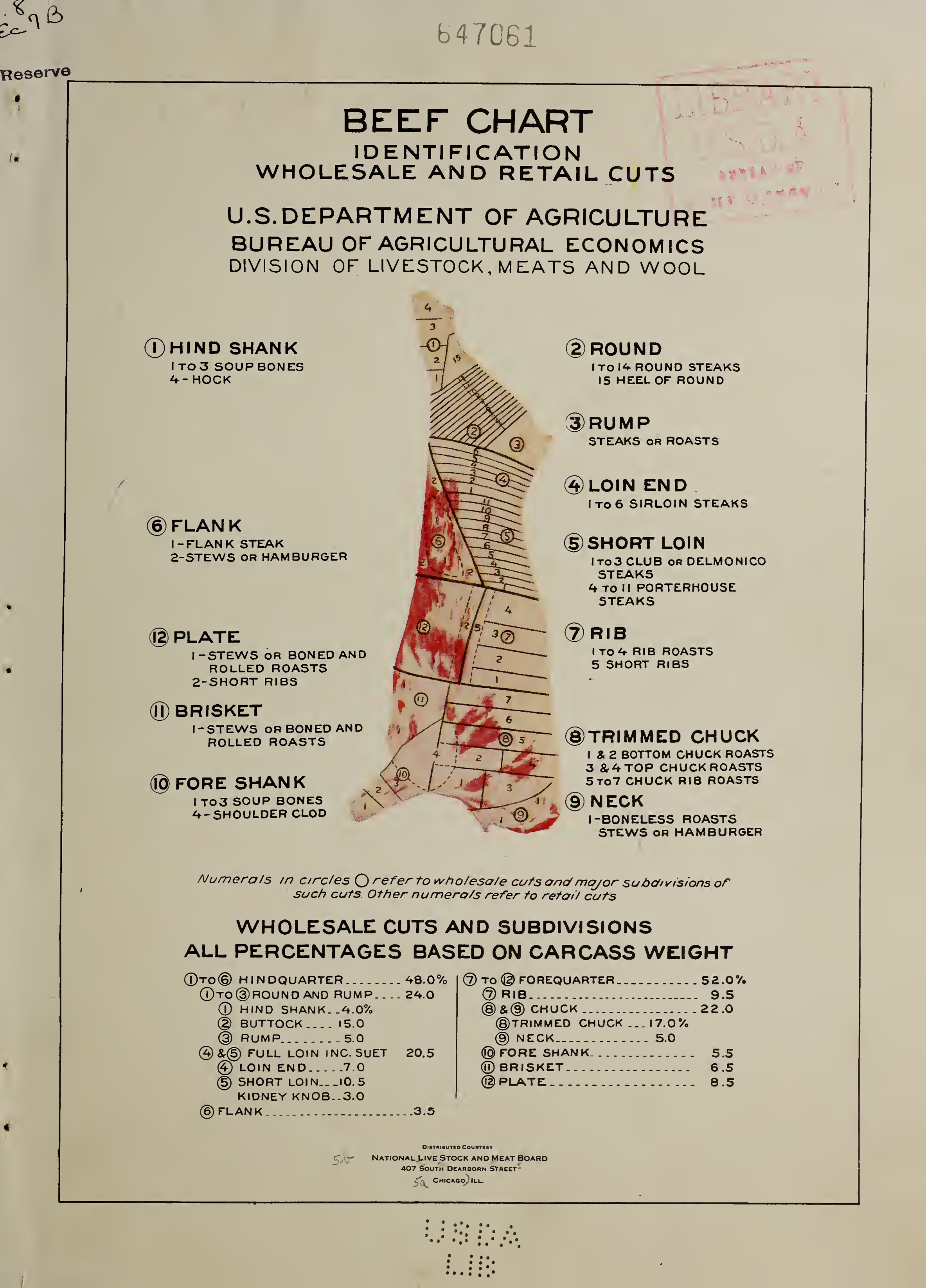
Beef chart: identification, wholesale and retail cuts

1920
Historical butcher-reference map · 1920A historical, labeled butcher-reference chart. Use it to study cut locations; check current Florida FFA rules for the contest answer list.
Original source PDF ↗
1920 USDA beef wholesale and retail cut chart, showing the carcass with marked wholesale regions and printed regional cut names.Open full-size chart to zoom ↗
Chart is shown on this page as a local high-resolution image. Open the full-size image to zoom. Its historical retail terms are not the current Florida FFA answer list.
United States Bureau of Agricultural Economics, Division of Livestock, Meats and Wool · 1920

Public-domain U.S. federal work; the USDA National Agricultural Library contributor reports no known copyright restrictions.

A historical, labeled butcher-reference chart. Use it to study cut locations; check current Florida FFA rules for the contest answer list.

Source and reuse details ↗
Current Florida FFA study list · verified September 2025

Study the 51 beef retail-cut rows.

Every row keeps species, primal, retail code, and cookery code together. The cut chart above explains broad regions; this table is the current event list.

Open the current rule publication ↗
Showing 51 of 51

Read codes as a group: a retail number alone may repeat under a different species or primal. Pork Sausage Links and Sausage are separate printed entries sharing retail code 87.

Current official Adobe publication transcribed from enlarged visual tables; older searchable editions were not used for the corrections listed below. Source table: Adobe pages 5–6; printed guide pages 345–346. This study aid transcribes the listed facts and does not reproduce the rule pages.

Florida FFA Middle School Meats Evaluation · September 2025 ↗
Real meat photo · reference example

See the actual product.

This licensed species photo adds product context. It is not a cut-boundary chart or a subcut answer; use the current list and labeled map for identification.
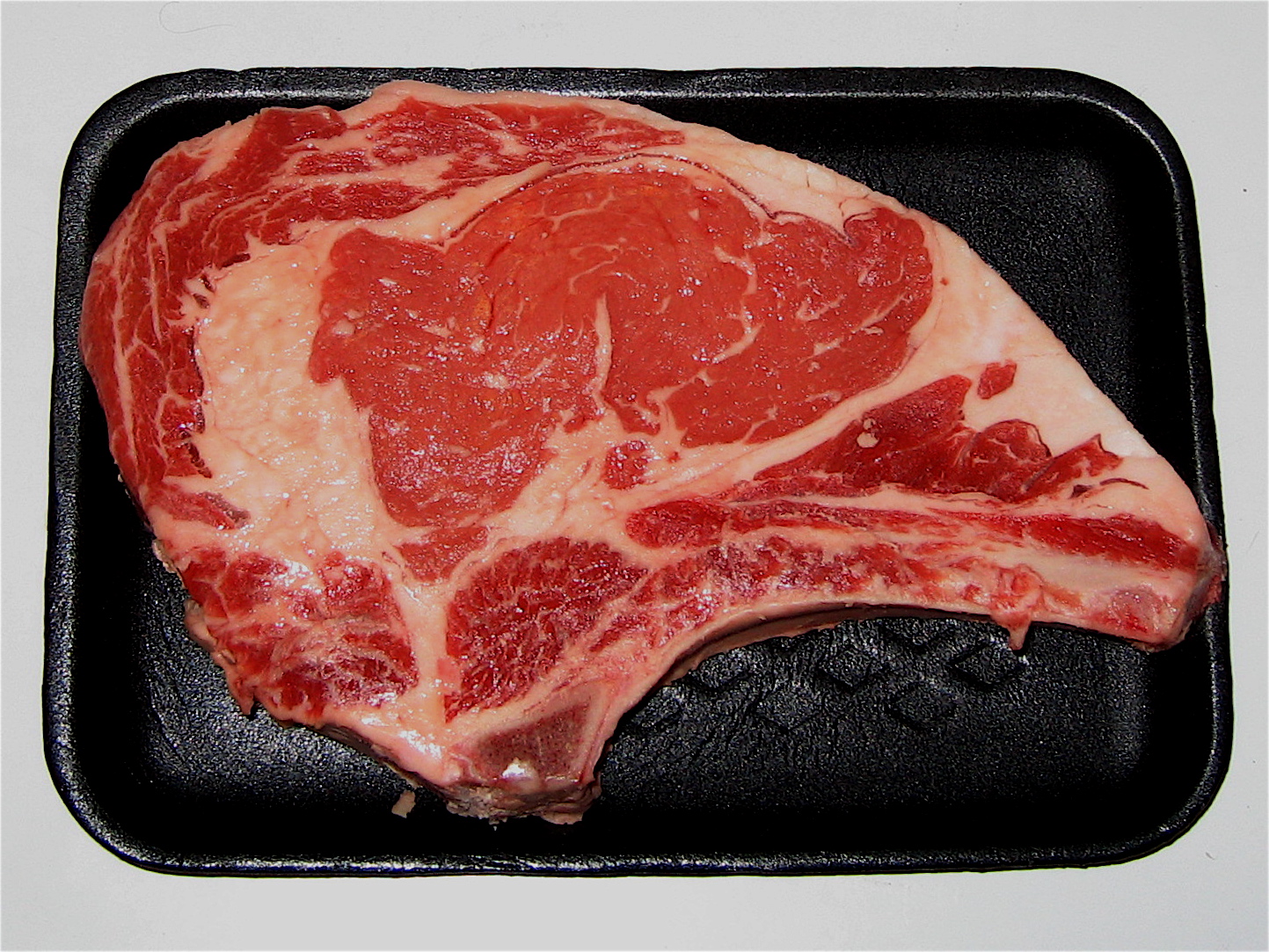
Unmodified photograph of a raw USDA Choice bone-in beef rib steak on a dark tray.Open full-resolution photo ↗
USDA Choice bone-in rib steak · introductory exampleMichael C. Berch (MCB) · CC BY-SA 2.5Reproduced unmodified. Source page ↗
Current event reference

Florida FFA rules control the list.

This page displays a verified transcription of the eligible retail rows and does not reproduce a handbook.

Open current Florida FFA Meats rules ↗
Historical map reference

Beef cut locations

The local high-resolution chart is available on this page. It helps with region study; current names and codes are in the FFA list above.

Open the source publication ↗
Study distinction

External anatomy and meat cuts are separate.

For live-animal body parts, return to the livestock photo study. For carcass cuts, use the labeled butcher chart and current FFA cut list.

Open live-animal body-parts study →

Beef Cattle practice terms

These are terms used in this study set. Current Florida FFA rules decide the season’s official answer list; wider chart regions remain context.

01

Chuck

Large front-quarter region behind the neck and over the shoulder.

How to find itStart at the shoulder and upper front ribs; the chuck is the broad front body block.
Do not confuseRib — rib begins immediately behind the chuck; Brisket is lower on the chest.
02

Rib

Upper-middle wholesale region immediately behind the chuck.

How to find itMove rearward from the chuck to the first major upper-middle body section.
Do not confuseLoin — loin is farther rearward; Chuck is immediately in front.
03

Loin

Upper rear-middle region behind the rib and ahead of the hindquarter.

How to find itFollow the topline rearward from rib toward the hip; the loin sits between them.
Do not confuseRib — rib is more forward; Round is the rear-quarter region.
04

Round

Large rear-quarter wholesale region of the hindquarter.

How to find itGo to the muscular rear quarter behind the loin.
Do not confuseLoin — loin is on the upper back ahead of the hindquarter.
05

Brisket

Lower front chest wholesale region beneath the chuck.

How to find itDrop from the shoulder/chuck to the chest floor at the front of the body.
Do not confuseChuck — chuck is above it; Flank is much farther rearward.
06

Flank

Lower rear abdominal region immediately ahead of the hind leg.

How to find itFind the lower belly-side just in front of the rear quarter.
Do not confuseLoin — loin is directly above; Round is directly behind.

Neighbor checks

Contest recall gets faster when the student knows what sits in front of, behind, above and below each answer.

ChuckvsRib

Chuck is the broad front-quarter shoulder region; Rib begins immediately behind it.

RibvsLoin

Rib is the upper middle ahead of the Loin; Loin runs rearward toward the hip.

LoinvsRound

Loin stays on the upper back; Round is the heavy rear quarter.

BrisketvsChuck

Brisket is low on the chest; Chuck sits directly above and behind the neck/shoulder.

FlankvsLoin

Flank is low and rearward on the abdomen; Loin is directly above it.

Current event rulesFlorida FFA Middle School Livestock Evaluation

Use current season rules to confirm event terms and judging format.

Open current event hub ↗
Placement cross-checkUniversity of Kentucky Beef Cattle Discovery

Used as a secondary education reference for how wholesale regions relate on the animal.

Open Extension resource ↗
Practice nextPut the study terms under pressure.

After the labeled chart and neighbor checks feel familiar, use the Livestock practice page to continue.

Practice livestock cuts →