Jowl
Cheek and lower-jaw region at the front of the hog.
How to find itFind the fleshy lower cheek immediately behind the snout.
Do not confuseBoston Shoulder — shoulder starts behind the head; jowl stays on the cheek/jaw.
Study the whole-carcass map, then use the current Florida FFA list for retail names and codes. External animal parts belong on live-animal photos; they stay in a separate study room.
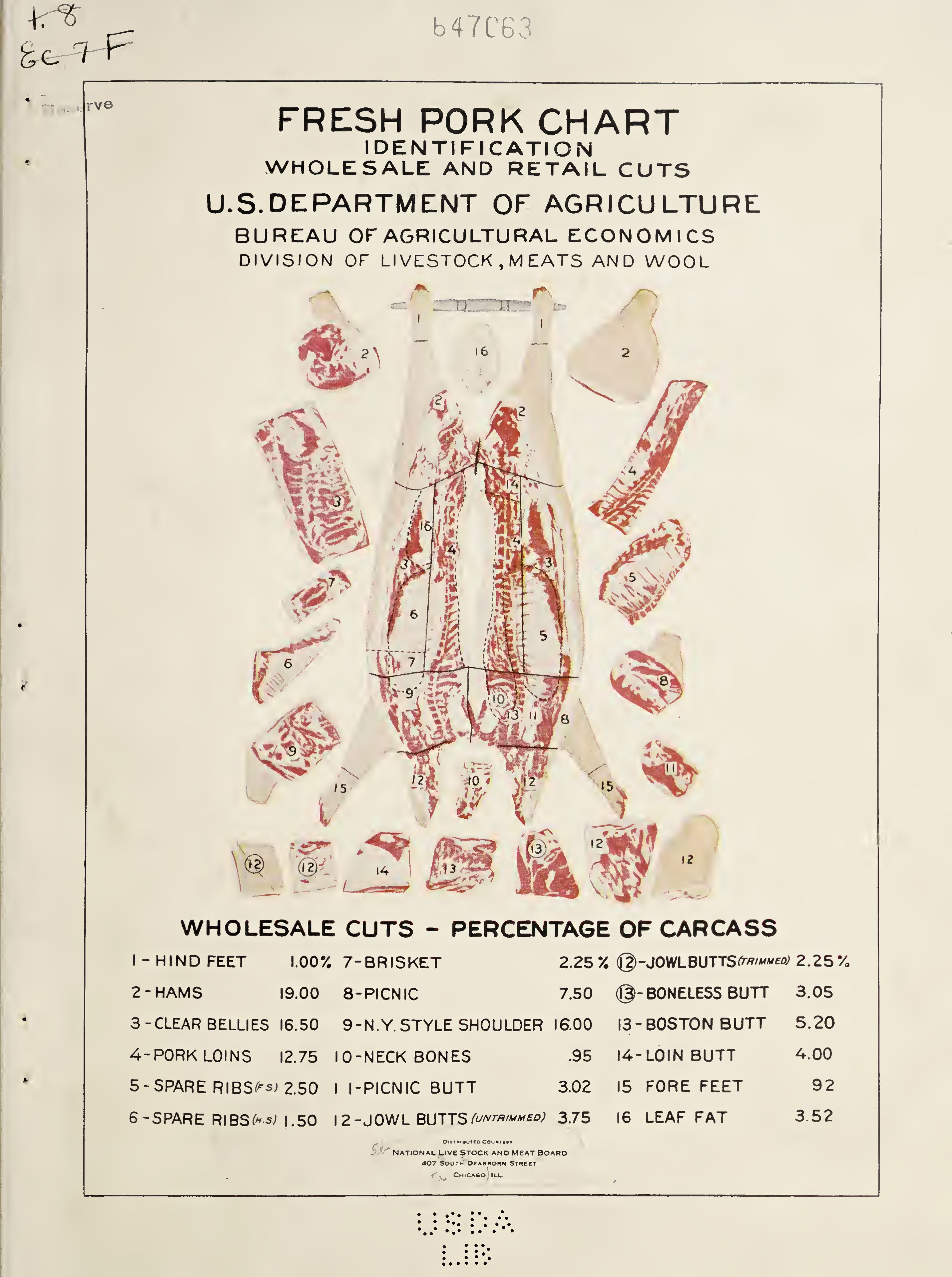 Open full-size chart to zoom ↗
Public-domain U.S. federal work; the USDA National Agricultural Library contributor reports no known copyright restrictions.
A historical, labeled butcher-reference chart. Use it to study cut locations; check current Florida FFA rules for the contest answer list.
Source and reuse details ↗Every row keeps species, primal, retail code, and cookery code together. The cut chart above explains broad regions; this table is the current event list.
Read codes as a group: a retail number alone may repeat under a different species or primal. Pork Sausage Links and Sausage are separate printed entries sharing retail code 87.
Current official Adobe publication transcribed from enlarged visual tables; older searchable editions were not used for the corrections listed below. Source table: Adobe pages 5–6; printed guide pages 345–346. This study aid transcribes the listed facts and does not reproduce the rule pages.
Florida FFA Middle School Meats Evaluation · September 2025 ↗This licensed species photo adds product context. It is not a cut-boundary chart or a subcut answer; use the current list and labeled map for identification.
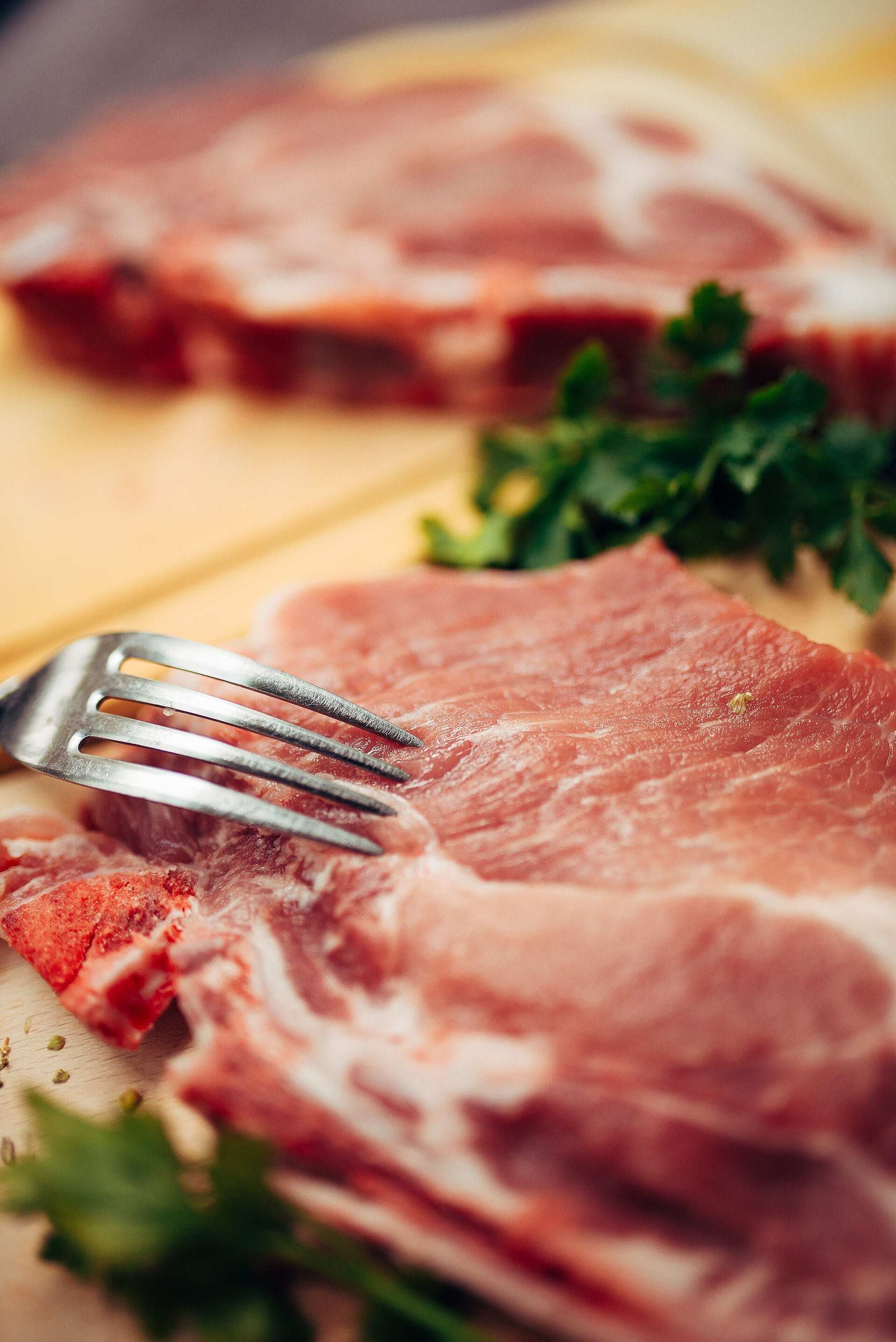 Open full-resolution photo ↗
This page displays a verified transcription of the eligible retail rows and does not reproduce a handbook.
Open current Florida FFA Meats rules ↗The local high-resolution chart is available on this page. It helps with region study; current names and codes are in the FFA list above.
Open the source publication ↗For live-animal body parts, return to the livestock photo study. For carcass cuts, use the labeled butcher chart and current FFA cut list.
Open live-animal body-parts study →These are terms used in this study set. Current Florida FFA rules decide the season’s official answer list; wider chart regions remain context.
Cheek and lower-jaw region at the front of the hog.
Upper shoulder wholesale region behind the head.
Lower shoulder and upper foreleg wholesale region.
Long upper-middle wholesale region between shoulder and ham.
Rib portion in the lower-middle side beneath the loin.
Lower-middle belly/side wholesale region behind the shoulder and below the loin.
Large rear-leg and hindquarter wholesale region.
Contest recall gets faster when the student knows what sits in front of, behind, above and below each answer.
Boston is the upper shoulder; Picnic is the lower shoulder and upper foreleg.
Loin is the long upper middle; Side is the lower belly-side underneath it.
Spare Ribs come from the forward lower side beneath the loin; the poster uses the Side as the parent outside region.
Loin ends before the hindquarter; Ham is the large rear leg and quarter.
Jowl stays on the cheek and lower jaw; Boston Shoulder begins behind the head.
Use current season rules to confirm event terms and judging format.
Open current event hub ↗Used as a secondary education reference for how wholesale regions relate on the animal.
Open Extension resource ↗After the labeled chart and neighbor checks feel familiar, use the Livestock practice page to continue.
Practice livestock cuts →